- Installs
- 50,000,000+
- Ratings
- 1,797,291
- Price
- Free
- Developer
- ELECTRONIC ARTS
Screenshots
Overview
Star Wars: Galaxy of Heroes is worth starting on Android in 2026 if you enjoy turn-based squad building and are prepared for a long collection grind with optional in-app purchases. It is a planning game rather than a quick story campaign, and it requires an internet connection.
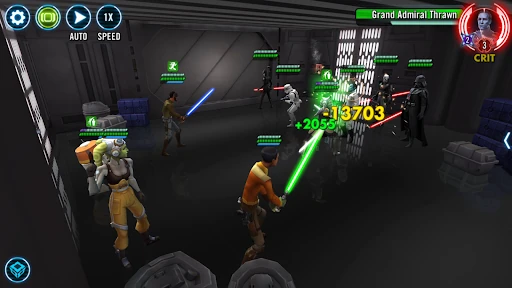
How the turn-based squad battles actually play
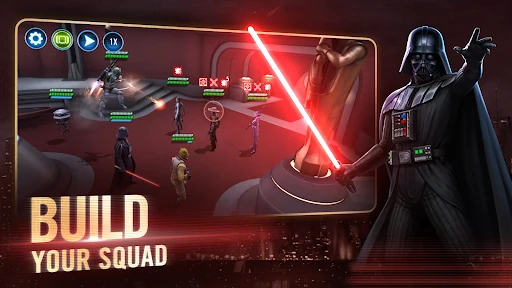
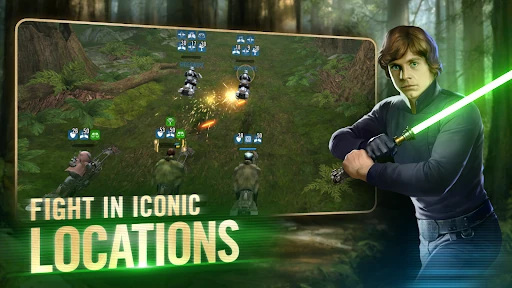
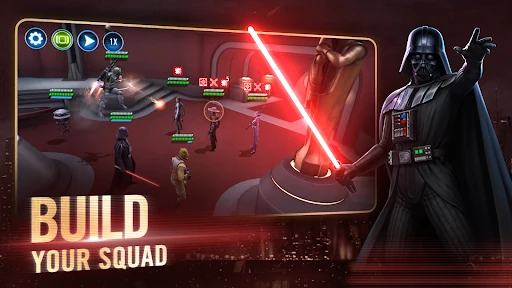
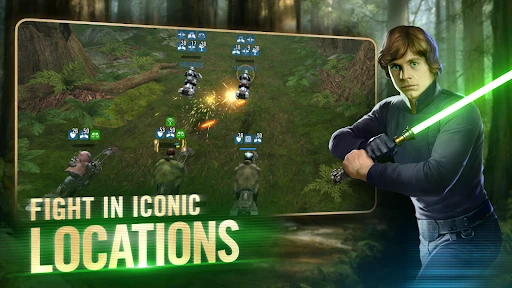
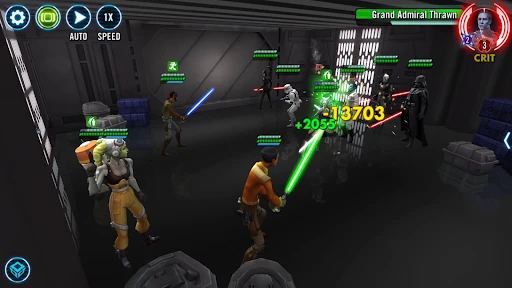
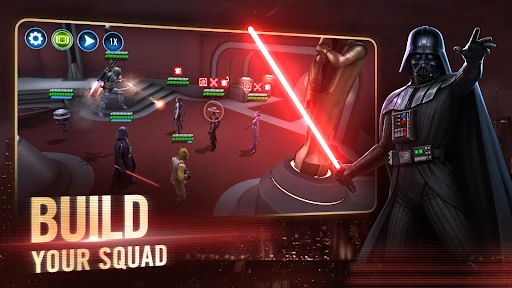
Battles are turn-based, but the meaningful decisions often happen before the fight: which heroes you bring, which faction bonuses you activate, and how their abilities and gear line up. Jedi, Sith, Rebel and other faction squads reward different kinds of planning, and a team that shares synergies usually gets more from its turns than a loose collection of strong characters. Reinforcements and counterattacks add decisions during combat without changing that basic rhythm.
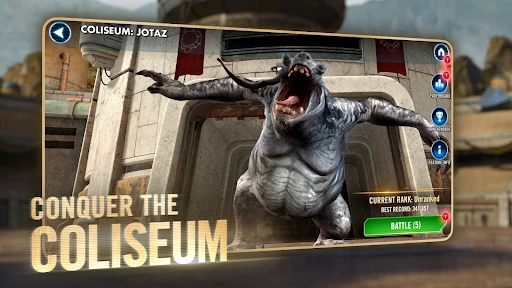
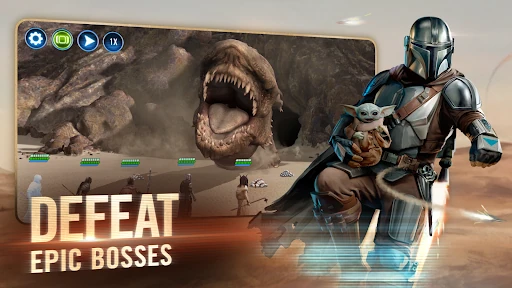
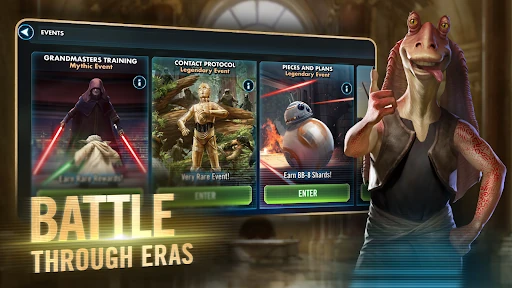
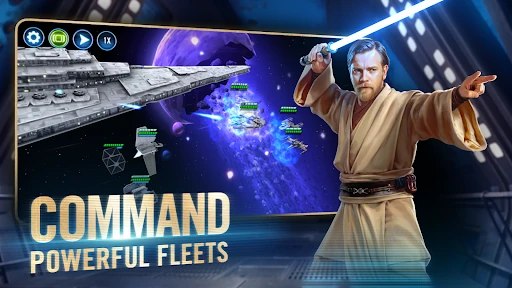
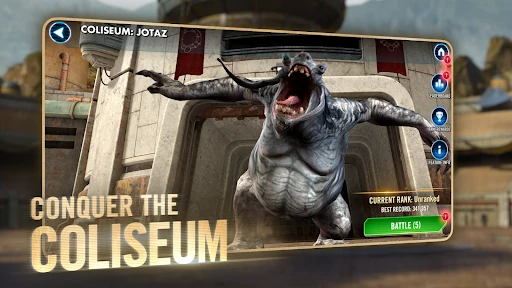
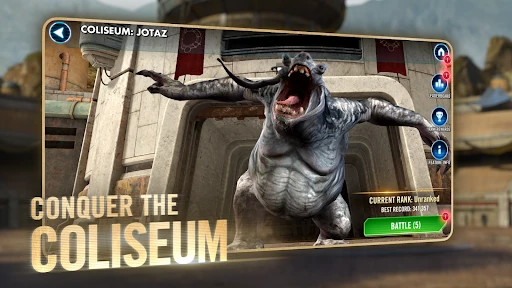
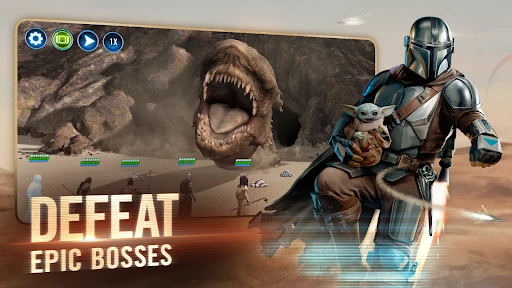
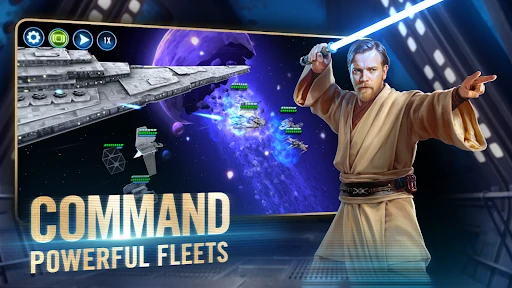
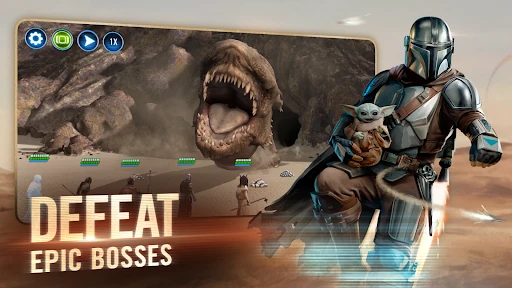
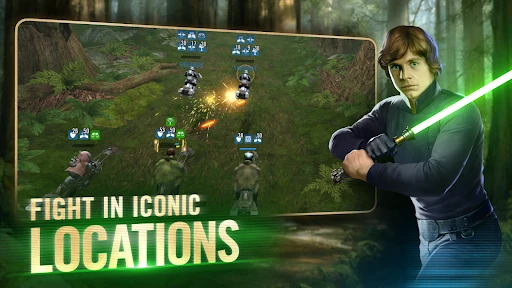
The same roster thinking runs through the game's modes. Campaign missions form the PvE foundation, while Squad Arena and other PvP formats test your squad against other players' setups. Guild raids and events ask for coordinated teams, and Fleet Arena extends the idea to ships, with heroes recruited as pilots and ship abilities unlocked separately. The Coliseum is another place to test a developed roster against boss encounters. If you like tuning a squad until its turns line up, this structure is the appeal; if you want direct action combat, it will feel slow.
The grind from first unlock to relic-level squads
The first unlock is not the finish line. Unlocking and upgrading top-tier characters takes sustained play, and gear, ability materials and relic upgrades all compete for the same attention. The progression ceiling remains high: relic materials have been made easier to obtain and the star requirements for Relic levels 4 and 5 lowered, but Relic level 10 sits above them.
In practice, that means treating the game as a resource-planning project over weeks or months rather than a campaign you clear and put down. Choosing which squad to build first matters more than chasing every new character, because a focused team can carry you through more content than a scattered roster. The grind is the core structure, not a temporary obstacle before the real game begins.
Free-to-play spending and the always-online requirement
Galaxy of Heroes is free to download, and the store description presents its in-game purchases as optional. Virtual currency can be used to acquire virtual items, including a random selection, so randomized offers are part of the economy. Players who want every squad quickly may feel pressure to buy; a spending limit set before installing is more useful than deciding mid-event.
The app also requires an internet connection, so it is not a game for dead zones unless you have a connection. In-game chat lets players communicate and can be disabled in settings. Players who can ignore randomized offers and enjoy slow roster building will be more comfortable than completionists who dislike missing out.
Era content and the Coliseum for a fresh account
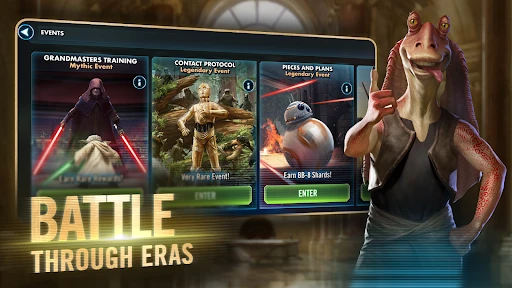
The Era system adds another layer for established rosters: Era isolation, Era levels, and new resources used to develop new Era units. Era content opens at level 10, so a fresh account reaches it fairly early rather than being locked out indefinitely. That gives a new player a visible path into newer content while still leaving plenty of room to grow.
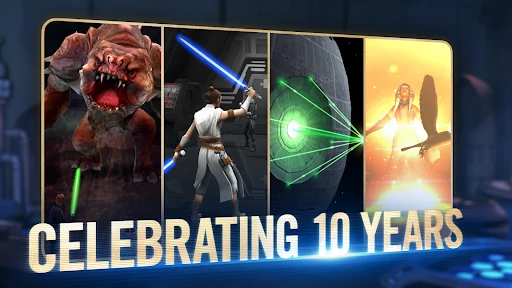
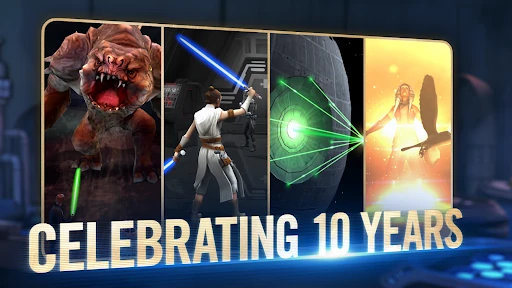
The Coliseum is a PvE mode where you fight bosses for a high score and leaderboard rewards. Treat it as a competitive progression track that rewards a developed roster, not a separate game with its own rules. Anniversary missions award Lightspeed Tokens, which can help with catch-up events; they are a bonus for starting during a celebration, not a reason to expect the grind to disappear.