
- Installs
- 1,000,000+
- Ratings
- 111,799
- Price
- Free
- Developer
- Drivvo
Screenshots
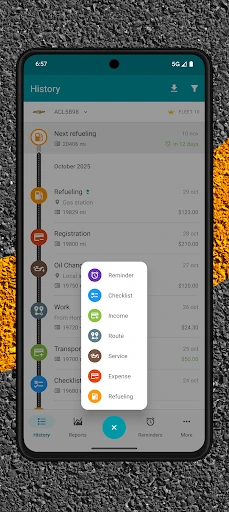
Overview
Drivvo is a practical Android app for a private car or motorcycle owner who wants one log for fill-ups, running costs and service reminders. The free personal plan is enough for a light, single-vehicle habit, while cloud backup and CSV export require the paid upgrade.
How a fill-up becomes fuel-economy data
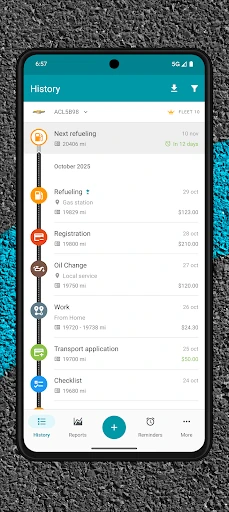
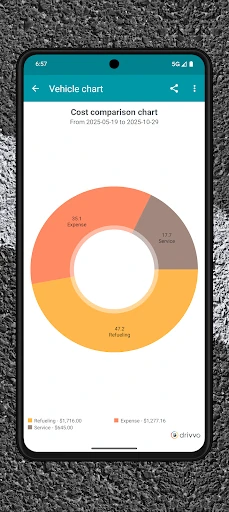
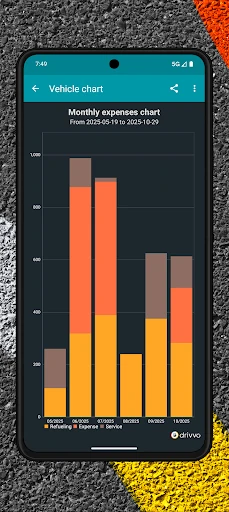
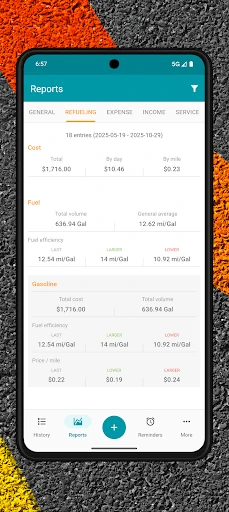
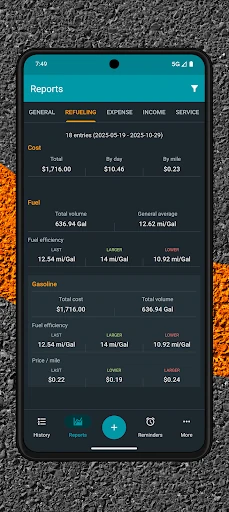
At the pump, Drivvo asks for the odometer and two of three values—price per litre, total cost or amount—and calculates the third. That is the core habit: enter the details before leaving the station rather than reconstructing them from a receipt later. Fuel averages are calculated between two full tanks, so the figures reflect actual consumption rather than a single purchase. The app also estimates the next fill-up date and odometer from recent entries, shows a Next refuelling card in History, and on Android sends a notification on that date with the latest average. Reports go beyond one number: overall average with lowest and highest values, cost per day and per mile, average fuel price, station spending and charts by month, fuel and station. Where to refuel adds nearby station prices on a map.
Tracking expenses, services, and work income in one place
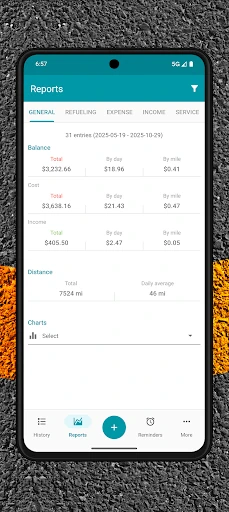
Expenses cover taxes, insurance, fines and parking; services cover oil changes, brakes, tyres and filters. Logged together, they build a running-cost history for each vehicle, which is more useful than a fuel-only tally when you want to know what the car actually costs. Ride-hailing and delivery drivers can also record income and trips, helpful when pay or reimbursement is based on distance.
Service reminders by date or odometer
Reminders can be set by kilometre or date for oil changes, tyre replacement, inspections and overhauls, so maintenance follows the vehicle rather than memory. Custom checklist forms let you inspect brakes, tyres, lights and seat belts before a trip. The value is clearest on high-mileage, older or working vehicles, where a missed interval costs more than the reminder.
Free version limits, Pro extras, and the separate fleet tool
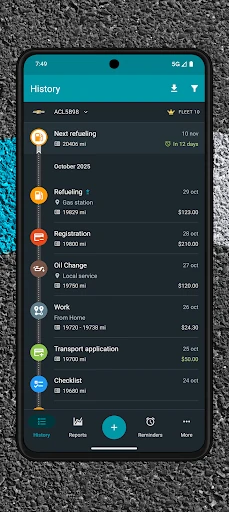
The free personal plan allows two active vehicles and unlimited refuelling records, but shows ads and leaves out cloud backup, device sync and CSV/Excel export. Pro adds those, removes ads and includes a dark theme, and can restore data from some rival apps. Because the backup and export gap matters more after a year of records than on day one, decide before you accumulate data you would rather not lose. Business fleet use is a different product: a web-managed system with driver management and offline driver fill-ups, not something the personal Android app turns into by adding vehicles.
Partial fill-ups, missed logs, and accurate averages
Fuel averages are calculated between two full tanks; a partial fill-up carries into the next full-tank calculation, so one part-fill does not wreck the average by itself. Use the “Are you filling the tank?” checkbox and the “Missed previous refuelling?” option to restart after a skipped log. A single fill-up can include up to three fuels, and a petrol and natural gas two-tank setup is counted together. Electric vehicles use kWh plus battery level at the start and end of a charge, so a charge to 100% is not required. If you rarely fill the tank fully, treat fuel economy as an estimate and rely on the expense and service logs for the firmer record.