- Installs
- 100,000,000+
- Ratings
- 1,186,621
- Price
- Free
- Developer
- Magic Tavern, Inc.
Screenshots









Overview
Project Makeover on Android is a match-3 puzzle game with a makeover story attached: clear stages to earn coins and stars, then spend them on a client's hair, outfit, makeup and room. The puzzles are the main activity and the styling is the payoff, which suits players who want a visible reason to keep clearing boards; anyone hoping for a free-form fashion designer will find the choices narrower than the makeover framing suggests.
How the puzzle-and-makeover loop actually works
One cycle is straightforward. A stage gives you a board and a goal, and you match pieces until that goal is met. Clearing it pays coins, which you take to the current client and spend category by category: a hairstyle, a garment, makeup, a piece of furniture. Special stages pay stars instead of coins, and those stars gate your progress through the story chapters, so a good run can move the plot forward without necessarily funding the next pair of shoes. Finishing with moves to spare converts them into extra money, which gives efficient clears a small edge over scraping through.
How much choice you get in each makeover
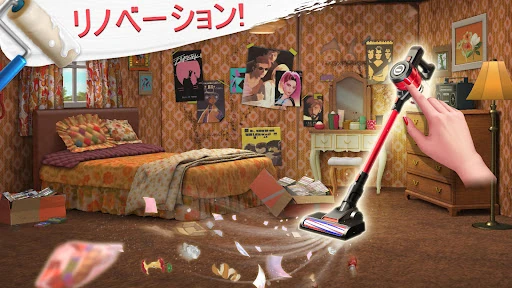
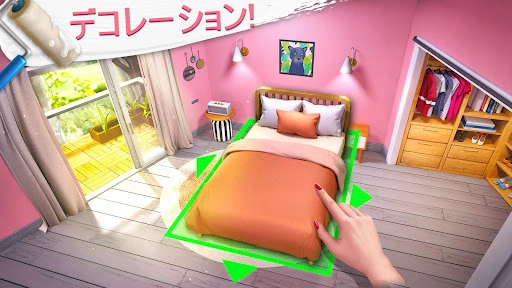
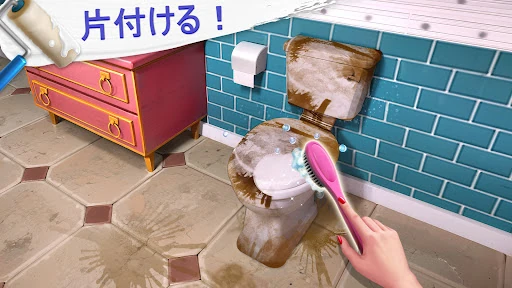
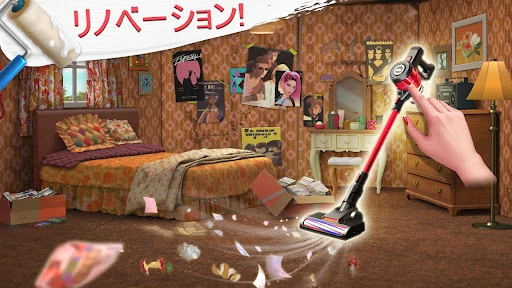
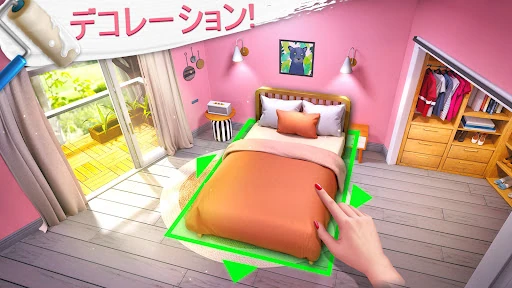
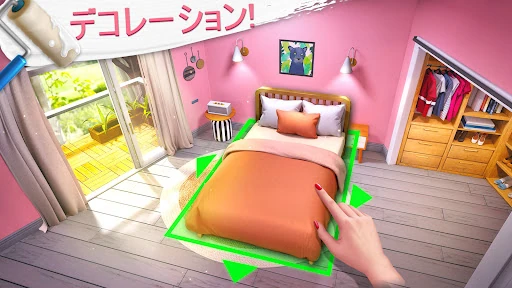
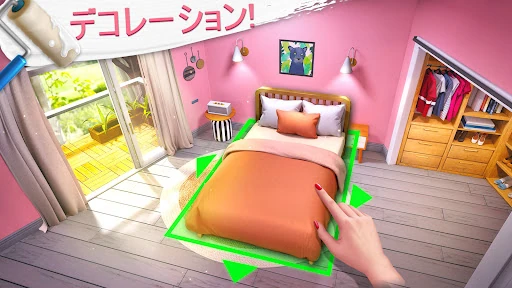
Each makeover is a sequence of choices from a few preset options, not a blank canvas. You pick among the hairstyles, clothes, makeup looks and room items the game offers, then watch the client react. That keeps scenes quick and tied to the story, and it makes the pleasure come from putting a coherent look together rather than fine-tuning every detail. The limitation is real: you cannot adjust colors, layer pieces or design beyond what is presented. Room decoration follows the same pattern. You can also style an avatar of your own, though the main work is still the client makeovers. Treat Project Makeover as a styling game with guardrails rather than a creative sandbox.
Puzzle difficulty, boosters and obstacle variety
Matches of four or five create boosters: a rocket clears a row or column, a firecracker clears a cross, a bomb clears a 3x3 area and a rainbow removes tiles of one type. Combining them is often how you handle a tight move limit. Obstacles are not just decoration. Shirts clear when you match beside them, cameras have to be dropped off the bottom of the board, belts block the tiles they wrap, and spray bottles fill through nearby matches. Later stages mix these demands, so you spend more time reading the board than repeating a familiar pattern.
Lives, waiting and what free play costs
A failed level costs one of five lives. When they run out, you wait for them to regenerate, which naturally turns play into short sessions. Tools that clear tiles without spending a move — scissors for one tile, brushes for a row and column, perfume bottles for a 5x5 area — are scarce and mostly bought with gems, though events can supply some. That makes the gem side feel like convenience on a hard stage rather than a wall: you can wait, replay, or improve your board. In-app purchases are part of the design, but the game remains playable in free bursts if you are patient with the life timer.
The client stories and reality-show drama
Clients arrive with exaggerated personalities — egotistical fashion icons, scheming assistants, stubborn holdouts — and each chapter resolves their makeover along with a small plot beat. The tone is soap-opera comedy, which gives the levels a light narrative frame. If you mainly want puzzles, it is easy to treat the drama as decoration; if you like a bit of character silliness between boards, it is part of the draw.